6 things skin research knows that the beauty aisle does not advertise
Why the products keep changing and the result keeps plateauing.
 By Hannah ReeceHealth Science Journalist · Updated this week 5 min read
There is a shelf of half-used bottles in almost every bathroom. The products were not frauds. They were simply working on the wrong layer. Six things the research makes clear.
The change is structural, not superficial
Skin is held up by a collagen and elastin scaffold. From the mid-thirties, rebuilding falls behind breakdown.
Thinner skin and slackening along the jaw are scaffold changes. No surface product reaches that depth.

Penetration is a physical limit, not a formulation problem
Most molecules in topical products are too large to cross into the dermal layer in meaningful quantity.
That constraint is precisely why laboratory research moved toward signalling molecules instead.
Copper peptide research is older than most people assume
GHK-Cu has been studied since the 1970s across wound healing and tissue repair literature.
That length of record is rare in this category and is why it keeps reappearing in new research.
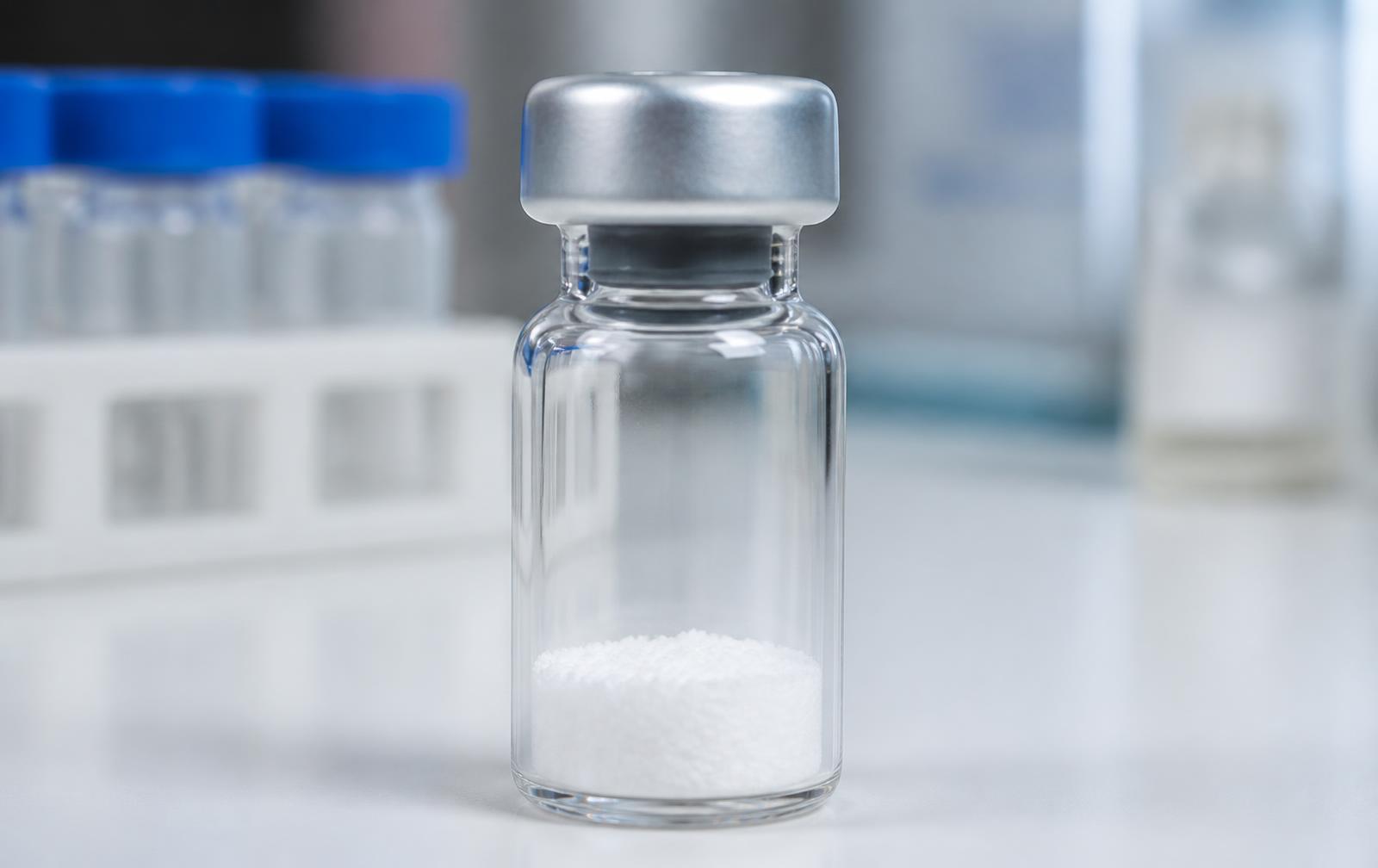
Repair is governed by several signals, not one
Blended research preparations such as GLOW and KLOW exist because tissue remodelling involves multiple pathways.
Researchers examine them together rather than isolating a single mechanism.
Sleep and glycaemic load both register in skin research
Glycation, where sugars bind to collagen fibres and stiffen them, is measurable and cumulative.
Sleep quality affects the overnight repair window that skin depends on.
Without a certificate of analysis, the vial is an assumption
Peptides are fragile and the category has minimal enforcement. Third-party batch testing is the only real verification.
It does not make a compound effective. It confirms what is actually in the vial.
None of this makes skincare pointless. It explains why results plateau and where the research went looking instead. Biogenesis Labs publishes batch-level analysis across its catalogue and supplies every compound strictly for laboratory research use.